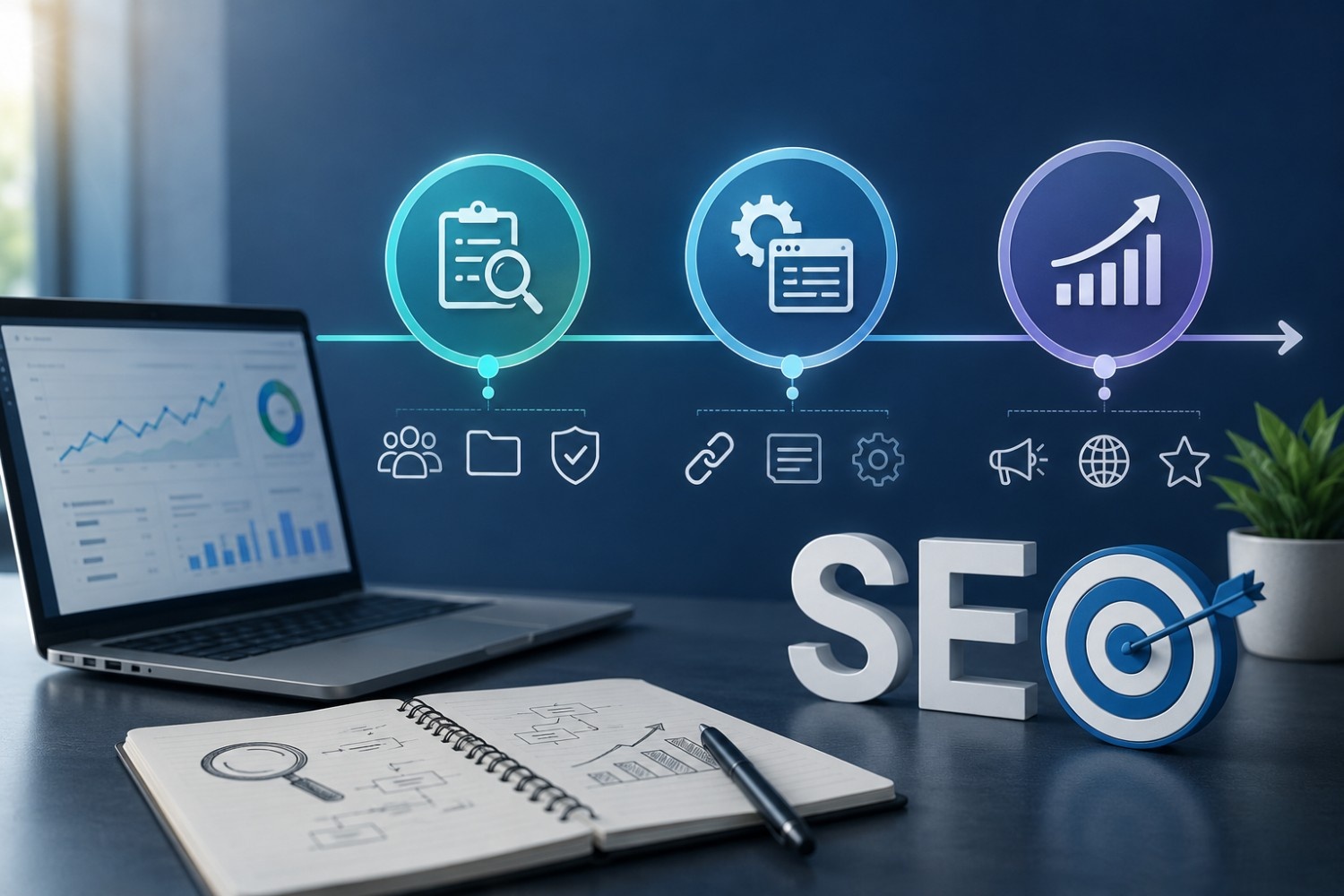
Enlisting a professional search engine optimization agency represents a major transition in an organization’s digital acquisition strategy. Unlike paid media channels that generate immediate visibility in exchange for direct ad spend, organic search engine optimization operates as a long-term capital investment in a brand’s digital infrastructure. The early phases of this partnership require rigorous coordination, deep technical evaluation, and a fundamental alignment of strategic objectives between the client and the agency. Because search engine algorithms rely on crawl cycles, structural indexing, and compounding authority signals, the initial three months of any professional campaign focus on laying a highly resilient foundation.
Understanding the specific operational milestones, resource demands, and technical progressions that occur during the first 90 days allows business leaders to evaluate their return on investment accurately and avoid the common pitfalls of misaligned expectations. In an era increasingly shaped by generative search experiences and evolving search engines, a modern organic campaign must optimize not only for traditional search engine result pages but also for advanced digital touchpoints. Organizations can explore advanced search methodologies and comprehensive digital strategies by visiting the SWS Marketing Agency.
Key Takeaways
- Hiring an agency requires a collaborative commitment of 5 to 10 hours per week from internal teams during the initial onboarding phase.
- The first 30 days focus entirely on data discovery, resolving tracking issues, and identifying deep technical crawl barriers.
- Active execution begins in the second month by fixing broken metadata, structuring internal links, and launching core content hubs.
- The third month shifts focus toward building ethical external authority signals and optimizing content for modern AI search engines.
- Early campaign success at Day 90 is measured by rising search impressions and improved technical health scores rather than immediate revenue.
Resource Demands and Operational Timelines
A common misconception among business leaders is that hiring an agency immediately relieves the internal marketing team of all search-related duties. In reality, the first quarter of an organic search campaign is highly collaborative and requires a significant commitment of time from internal stakeholders to establish a successful direction.
The operational rhythm of the partnership changes as the relationship progresses, transitioning from intensive setup to a steady rhythm of approvals and evaluations.
| Temporal Phase | Primary Tactical Focus | Client Weekly Bandwidth | Key Operational Benchmarks |
|---|---|---|---|
| Month 1 (Days 1 to 30) | Discovery, Diagnostic Auditing, and Technical Groundwork | 5 to 10 Hours per Week | Competitor Analysis, Technical Audits, Keyword Mapping, and Tracking Setup |
| Month 2 (Days 31 to 60) | Technical Remediation, Internal Linking, and Initial Content Execution | 3 to 5 Hours per Week | Resolving Crawl Barriers, Metadata Optimization, Content Cluster Deployment, and First Technical Patches |
| Month 3 (Days 61 to 90) | Authority Acquisition, AI Optimization, and Early Performance Review | 2 to 3 Hours per Week | Link Building, Schema Markup, Tracking Early Ranking Signals, and Future Planning |
This structured allocation of time prevents the confusion that often disrupts early campaigns. By expecting a heavier commitment of time during the initial onboarding phase, enterprises can prepare their teams to collaborate effectively with the incoming agency.
Month 1: Onboarding, Strategic Alignment, and Diagnostic Auditing
The first thirty days of an agency partnership focus on alignment and deep technical diagnostics. During this period, the agency operates as a corporate intelligence unit, collecting data, diagnosing historical structural errors, and building a custom roadmap. A reliable agency does not begin publishing content or acquiring backlinks without establishing a clean, mathematically sound baseline.
Onboarding and Infrastructure Access
The kickoff of an organic campaign requires a secure transfer of administrative access across the client’s digital ecosystem. During this phase, the agency secures credentials for the following platforms:
- Google Search Console and Google Analytics 4 to establish verified baseline tracking.
- Content Management Systems to facilitate eventual on-page execution.
- Tag management tools and proprietary databases to configure conversion tracking accurately.
During these initial weeks, the agency conducts comprehensive discovery sessions to align the incoming marketing roadmap with the organization’s broader business objectives, target buyer personas, and profit margins. This ensures that search terms are selected based on commercial intent and revenue potential rather than simple search volume.
Deep Diagnostic Technical Auditing
A website cannot rank highly if search engine crawlers encounter barriers to access. The agency conducts a detailed audit of the site’s technical infrastructure to identify crawl and indexation obstacles. This audit evaluates:
- Crawlability and Indexing Barriers: Pinpointing crawl loops, broken links, redirect chains, and incorrect indexing directives such as accidental noindex tags on high-value service pages.
- Core Web Vitals and Site Speed: Measuring technical factors such as Largest Contentful Paint, Interaction to Next Paint, and Cumulative Layout Shift to satisfy modern search engine performance standards.
- Site Architecture and URL Hierarchy: Reorganizing messy site structures into logical directory paths that make it easier for search engine bots to crawl and understand the site.
Competitor Intelligence and Search Intent Mapping
Using data rather than intuition, the agency analyzes competing sites to identify content gaps, traffic distribution models, and untapped opportunities. The agency maps keywords to specific stages of the buyer journey, aligning informational, commercial, and transactional terms with the appropriate pages. This mapping ensures that high-intent service pages are designed to capture qualified leads, while educational content answers the key informational queries of prospective buyers.
Month 2: Technical Remediation, Core Structure, and Content Orchestration
Once the strategic blueprint is finalized, the partnership moves from planning into active technical and content development. Month 2 is when the primary on-page and architectural improvements are implemented.
Technical Remediation and Metadata Optimization
During the second month, the agency begins fixing the high-priority technical issues found during Month 1. Common fixes include updating broken redirect paths, rewriting canonical tags to prevent duplicate content, and optimizing metadata. Metadata updates focus on:
- Title Tags and Header Structures: Writing descriptive, keyword-targeted titles and structured header outlines to match user intent.
- Meta Descriptions: Crafting compelling, search-optimized meta descriptions to improve Click-Through Rates in search results.
- Structured Data Installation: Deploying Schema.org markup to help search engines easily read and display the page content.
The mathematical correlation between an optimized metadata structure and organic click-through performance is expressed as:
Post-Optimization Clicks
Post-Optimization Impressions
−
Pre-Optimization Clicks
Pre-Optimization Impressions
× 100
Internal Linking Architecture Development
Internal linking is a highly effective but often overlooked way to distribute authority across a website. In Month 2, the agency builds a structured internal linking network. This involves:
- Organizing related pages into clear content hubs.
- Linking supporting blog posts to main service or transactional pages to pass authority.
- Optimizing anchor text with relevant descriptive terms, making it easier for search engine crawlers to discover and index deeper pages.
Launching the Content Machine
SEO content is designed to establish clear topical authority. During Month 2, the agency starts publishing new or updated content based on the approved content calendar. This phase requires close collaboration to align the writing with the brand’s unique voice, target audience, and subject matter expertise.
Month 3: Authority Foundations, Answer Engine Optimization, and Early Momentum
By the third month, the technical foundations are in place, the site structure is optimized, and consistent publishing is underway. The focus now shifts to expanding external authority, preparing for modern AI-driven search environments, and measuring early performance indicators.
Ethical Authority Building and Digital PR
Search engines rely heavily on off-page authority signals to evaluate a website’s trustworthiness. In Month 3, the agency rolls out its external link-building strategy. Rather than purchasing low-quality, spammy backlinks that can trigger search engine penalties, a professional agency focuses on ethical authority building. This includes:
- Targeted Outreach: Reaching out to reputable industry publications, partners, and media outlets to secure high-quality backlink opportunities.
- Digital PR and Asset Promotion: Creating and promoting high-value resources, such as proprietary research or detailed industry reports, to earn natural citations and mentions.
- Brand Citation Building: Ensuring the business’s name, address, and phone number are consistently listed across primary business directories and maps.
Answer Engine Optimization and Modern AI Search
Search landscapes are evolving rapidly with the rise of AI-driven summary panels and generative search overviews. With research indicating that over 60 percent of traditional desktop searches and 75 percent of mobile searches result in zero-click sessions, optimizing for AI indexing is essential. A progressive agency structures your web assets for both human readers and search engines during Month 3.
| Optimization Element | Technical Rationale | Practical Implementation |
|---|---|---|
| Direct Answer Integration | AI crawlers look for clear, concise statements to cite in search summaries. | Place direct, 40 to 60-word definitions and answers at the beginning of informational sections. |
| Schema.org Deployment | Structured data provides clear context that AI search engines can easily parse. | Add FAQ, Product, and Article schema scripts to key pages. |
| Proprietary Data Moats | Original statistics and unique insights are highly cited by AI systems. | Publish original research, customer surveys, or specific industry findings. |
| Scannable Tables and Lists | Highly structured information is easy for AI algorithms to extract and display. | Use clear markdown tables and bulleted lists to break down complex comparisons. |
For detailed information on the strategic values of these methodologies, organizations can research more through the SWS Marketing Agency About Us Page.
Tracking Early Performance Indicators
While a full return on investment usually takes four to twelve months to compound, the first signs of success appear in Month 3. Early indicators that the strategy is working include:
- Increasing Search Console Impressions: Rising search impressions show that the site is appearing more frequently in search results, even if users have not clicked through yet.
- Stabilizing Indexation Rates: Clear crawl trends with a growing number of successfully indexed pages in Search Console.
- Ranking Movement for Long-Tail Terms: Improved visibility for lower-competition, highly specific search terms.
- Technical Health Score Improvement: Achieving site health scores above 90 percent on technical audits, with critical speed and indexing issues resolved.
Evaluating Partner Health: Green, Yellow, and Red Flags
To protect their marketing investments, organizations must have a clear framework to evaluate whether their agency is performing or faltering. Evaluating partner health during the first 90 days allows businesses to make informed decisions about the future of the partnership.
| Behavior Classification | Expected Indicators | Operational Examples |
|---|---|---|
| Green Flags (Optimal Health) | Consistent communication, strategic transparency, and steady execution of the roadmap. | The agency conducts regular kickoff and progress calls, updates tracking systems, and delivers high-quality content on schedule. |
| Yellow Flags (Caution Required) | Delayed deliverables, minor communication gaps, or a focus on vanity metrics. | The agency delivers reports late or structures content with inconsistent formatting, requiring closer client supervision. |
| Red Flags (Immediate Concern) | Total lack of communication, guaranteed ranking claims, or non-transparent reporting. | The agency fails to make technical site updates, ignores indexation issues, or keeps tracking systems hidden from the client. |
If a business identifies persistent red flags during the first 90 days, it is often wise to review the relationship and consider any contractual exit terms. SEO requires a significant investment of time and resources, and working with an uncooperative or inexperienced partner can stall organic growth for months.
Optimizing the Corporate Relationship for Compounding Returns
The success of an organic search campaign relies on mutual cooperation and active collaboration. To get the best possible results from the partnership, organizations should follow these best practices:
- Gather the Required Access Quickly: Delays in sharing CMS, analytics, or hosting access in the first week will push back the entire implementation timeline.
- Build Streamlined Feedback Loops: Try to provide prompt, constructive feedback on content and strategic roadmaps. Setting up a single, clear point of contact on both sides keeps approvals moving efficiently.
- Establish Reasonable Expectations: Avoid judging the entire campaign’s success solely by immediate conversions or revenue in the first 90 days. Instead, look for positive trends in search impressions, keyword visibility, and technical site health.
- Protect the Agency from Internal Interruptions: Keep the SEO strategy insulated from sudden internal shifts or budget changes. Providing a stable, consistent environment allows the agency to focus on executing and scaling the agreed-upon roadmap.
Conclusion: Building the Compounding Growth Flywheel
The first 90 days of an SEO agency partnership are focused on building a strong, technically sound foundation. While the early stages require detailed diagnostic work, structural fixes, and initial content development, these steps are necessary to set up long-term organic growth. By understanding this timeline and keeping expectations realistic, organizations can build a highly collaborative, successful relationship with their agency partner.
Once the initial onboarding, technical updates, and strategic plans are complete, the campaign is ready to scale. From Month 4 onward, the focus shifts to expanding content hubs, securing authoritative backlinks, and optimizing for conversion rates to turn search visibility into actual revenue. To discuss a custom SEO roadmap or explore our organic search solutions, organizations can connect with our strategy team by visiting the SWS Marketing Agency.
Frequently Asked Questions
1. Why don’t we see a massive spike in sales during the first 3 months?
Organic SEO relies on search engine crawl cycles, indexing updates, and compounding authority signals, meaning the initial 90 days are strictly dedicated to building a technical foundation rather than driving immediate conversions.
2. How much time does my internal marketing team need to dedicate to the agency?
Your team should plan for 5 to 10 hours per week in Month 1 for onboarding and asset sharing, which naturally tapers down to 2 to 3 hours per week by Month 3 for simple approvals.
3. What technical elements are fixed during the remediation phase?
Agencies focus on critical crawl errors, including broken redirect loops, duplicate content issues, missing Schema.org scripts, slow page speeds, and incorrect indexation directives.
4. What is Answer Engine Optimization (AEO), and why does it matter now?
AEO structures your content using direct answers, scannable lists, and clear tables so that generative AI search engines and summary panels can easily read and cite your website.
5. What are the biggest red flags to watch for in a new SEO partner?
Be concerned if an agency guarantees immediate top rankings, keeps tracking metrics hidden from you, fails to make structural site updates, or refuses to explain their strategic roadmap.
SWS Marketing is a white label digital marketing company which provide services to both agencies, and clients around the world. Our small team of SEO, PPC and social media experts deliver high-impact digital marketing solutions that help businesses grow their online presence. Agencies and Clients benefit from increased brand awareness, traffic, visibility and leads, created by our data-driven approach to search engine optimization(SEO), PPC, social media marketing, content marketing, digital PR, guest posting and more!